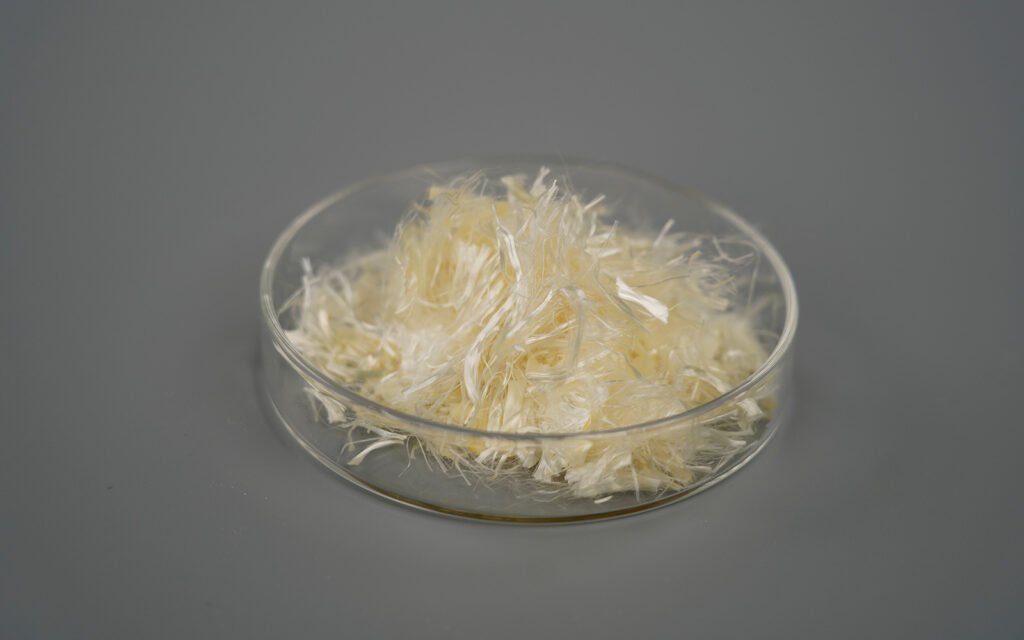
Good day on the following thorough article with respect to novel acrylonitrile yarn.
Polyacrylonitrile cloth represents a fabricated substance widely identified for its exceptional attributes. The preparation procedure necessitates the process of acrylonitrile polymer unit. This yields a tough cord possessing significant durability and unrivaled solvent resistance. Consequently, polyacrylonitrile secures applications in broad areas, covering wearables, carpets, and professional adaptations. Further scrutiny continues to investigate its potential in state-of-the-art technologies, such as surfaces.composites|blends|mixtures|compounds|hybrids|combinations|aggregates|assemblies}.
The Adaptable Environment of Polyacrylonitrile Fiber
carbon-precursor material material stands as a remarkably flexible material, detecting widespread use across multiple industries. Its unique chemical makeup – primarily including acrylonitrile modules – grants it premier properties. Customarily, it’s recognized for its aptitude to generate acrylic wear, but its promise extends significantly beyond any initial realm.- Its prominent tensile robustness makes it excellent for technical textiles.
- In addition, combining it with alternative polymers results in materials showing refined output.
- Selected grades supply protection to materials, particles, and combustion.
Surveying the Traits and Implementations of PAN Fiber
Polyacrylonitrile strand presents a special combination of aspects making it well-matched for a comprehensive range of operations. Its pronounced tenacity, remarkable chemical tolerance, and decent dimensional integrity are critical considerations in its efficacy. Additionally, the compound exhibits inherent blaze retardancy, strengthening its security profile. Typical purposes include:
- Guarding outfits
- Technical filaments
- Terrain mats for degradation prevention
- Augmentation in integrated compounds
Enhancements in Polyacrylonitrile Fiber Manufacturing
New trends in PAN fiber assembly highlight a range of essential areas. Particular notable adjustment involves utilizing progressive fiber shaping procedures, such as centrifugal spinning, supporting for enhanced governance over yarn architecture and traits. Additionally, study into alternative fluids and admixtures strives to decrease sustainable trace and enhance material quality in specific sectors. Finally, initiatives are oriented towards creating regular and upgradable fabrication mechanisms for factory application.
carbon precursor Fiber: From Fabric to Innovative Aggregates
Poly acrylonitrile fiber, often abbreviated as PVA, initially found each paramount role in some material mesh, providing great sturdiness and numerous good brightness. Yet, PAN acrylonitrile polyacrylonitrile fiber’s unique characteristics, specifically one’s high char presence, contain brought about through a quick increase into that sector throughout cutting-edge composite materials, which she serves as the vital fortifying unit.Renewable Solutions with Recycled Polyacrylonitrile Fiber
Creative plans apply upcycled synthetic nitrile fiber cloth as a eco-friendly substitute for conventional textile production. This process diminishes discard trace including scales down existing requirement related to mineral-based assets. Also, goods crafted from discussed component grant first-rate quality qualities in assorted markets extending through separation systems along with secure wear.
Obstacles and Future Currents in PAN Fiber Technology
Though notable advancements in organic fiber material processing, several complications linger. Production expenditures as of today constitute a key block, especially related to massive usage. Along with, accomplishing uniform specifications within countless material lots turns out challenging. Reflecting onward, future streams include study into sustainable chemical fiber raw materials, improving filamentous product tenacity leveraging innovative creation methods, and enlarging applications in dedicated territories consisting of security-grade shielding and spaceflight components.
Appreciating the Fundamental Configuration of Polyacrylonitrile Fiber
Carbon fiber precursor filament reveals a string arrangement built largely from successive vinyl cyanide modules. Numerous nitrile-based element possesses a triple-bonded carbon linkage junction, leading in marked molecular polarity and boosting extensive chain-to-chain associations. This singular arrangement is responsible for the superior robustness and fire-resistant resistance common of organic nitrile strand.acrylonitrile derivative Fiber: A Detailed Look at Manufacturing Techniques
The production of polyacrylonitrile strand typically launches with the chain reaction of acrylonitrile molecule. This mechanism often incorporates radical polymerization in a bulk or dispersed system, frequently adding initiators such as azobisisobutyronitrile (AIBN) or peroxides to stimulate the reaction. The formed polymer is then mixed in a compatible solvent like dimethylformamide (DMF) or N-methylpyrrolidone (NMP). Subsequent fiber formation using a aperture creates the fiber-like structure, which is then quenched in a precipitation bath to solidify the substance. Finally, the filaments undergo cleaning, drying and further treatments to reach the desired traits for the terminal polyacrylonitrile fiber mass.
Acknowledgments on behalf of examining this thorough article on acrylo-based strand.Sending a advantageous period.